
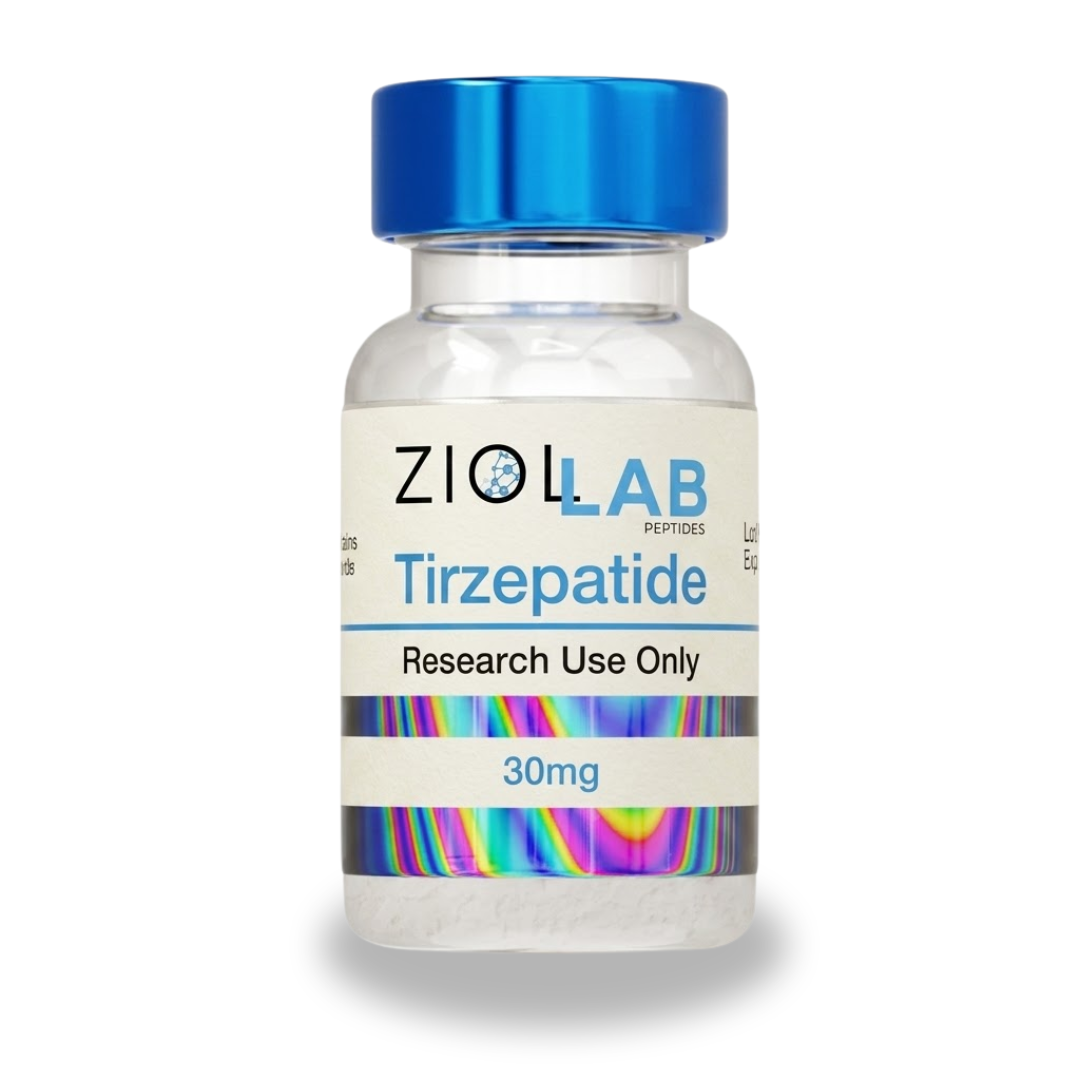
Tirzepatide – 30mg
Description
Tirzepatide is a first-in-class dual GIP and GLP-1 receptor agonist — a single molecule that activates two incretin pathways at once. In peptide research this dual mechanism has drawn intense interest for its effects on appetite signaling, insulin response and body-weight regulation.
In the landmark 72-week SURMOUNT-1 trial, participants on the 15 mg dose recorded a mean body-weight reduction of 20.9%, versus 3.1% on placebo. 57% of that group lost a fifth or more of their body weight, and 91% lost at least 5%.
Head-to-head data reinforce the signal: in SURPASS-2, tirzepatide produced greater weight loss than semaglutide — up to 5.5 kg more at the top dose — while lowering HbA1c by 2.30 points. Its dual-receptor design is widely cited as why it outperforms single-pathway GLP-1 agonist.
Supplied as a lyophilized powder for reconstitution. Figures above summarize published clinical findings on the tirzepatide molecule and are provided as scientific reference for laboratory research only.
| Form | Lyophilized powder |
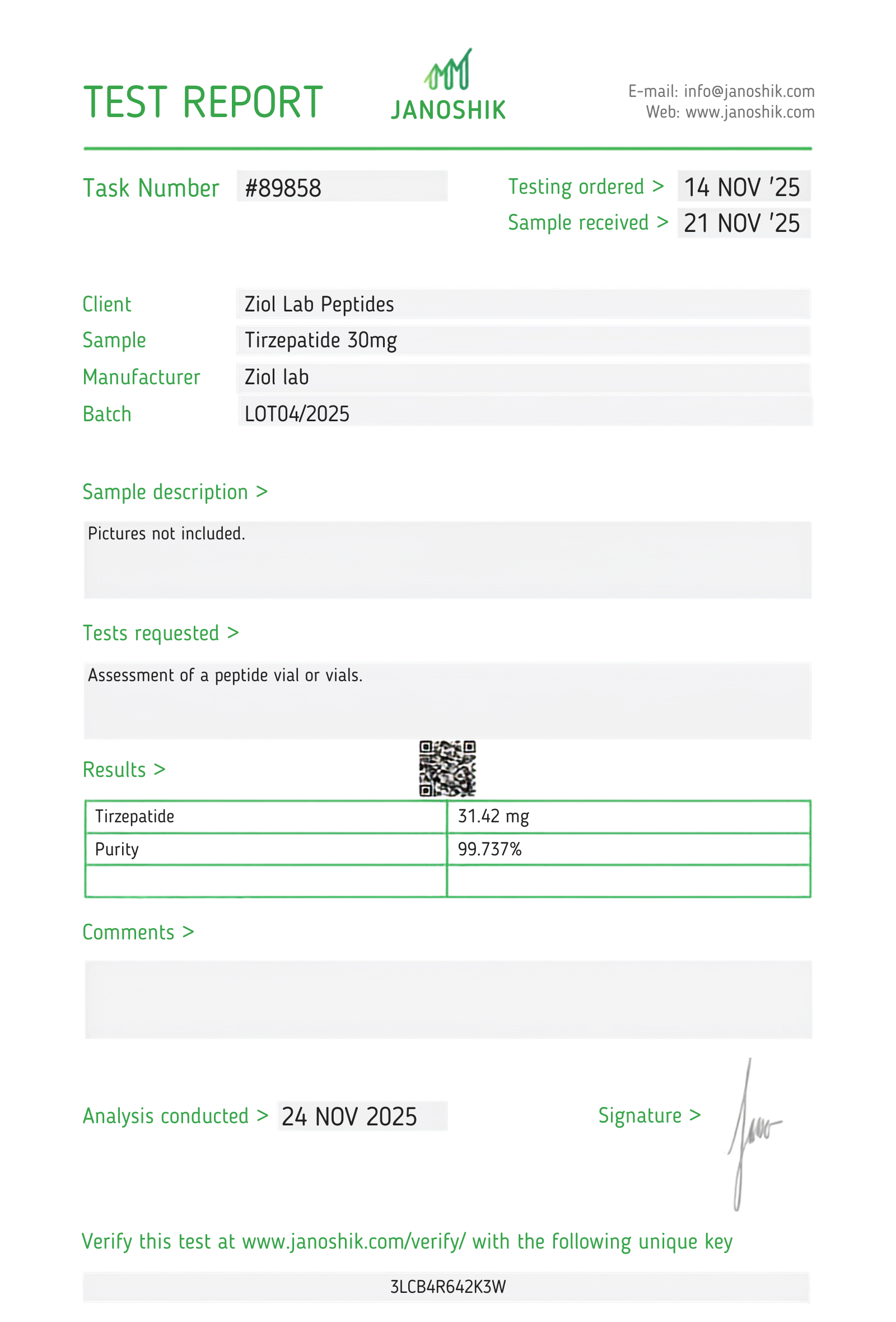
| Purity | ≥ 99% (HPLC / MS) |
| Testing | Third-party, every batch |
| Shipping | Same-day from the USA |
| Classification | Research Use Only |
Dual-Action Research Peptide
Two Receptors, One Molecule: The Science of Dual Activation
Tirzepatide represents a novel approach in incretin-based peptide research. Unlike single-target compounds, it activates two key receptors simultaneously: GLP-1 and GIP. This dual-agonist mechanism has been extensively documented in peer-reviewed literature for its interaction with metabolic pathways including glucose homeostasis and incretin signaling.
- Activates both GLP-1 and GIP receptors simultaneously
- First compound designed with this dual-agonist mechanism
- Extended half-life suitable for weekly research protocols
- Well-documented in peer-reviewed scientific journals
- Stable compound suitable for in-vitro research protocols
Molecular Design
Why Two Receptors Work Better Than One
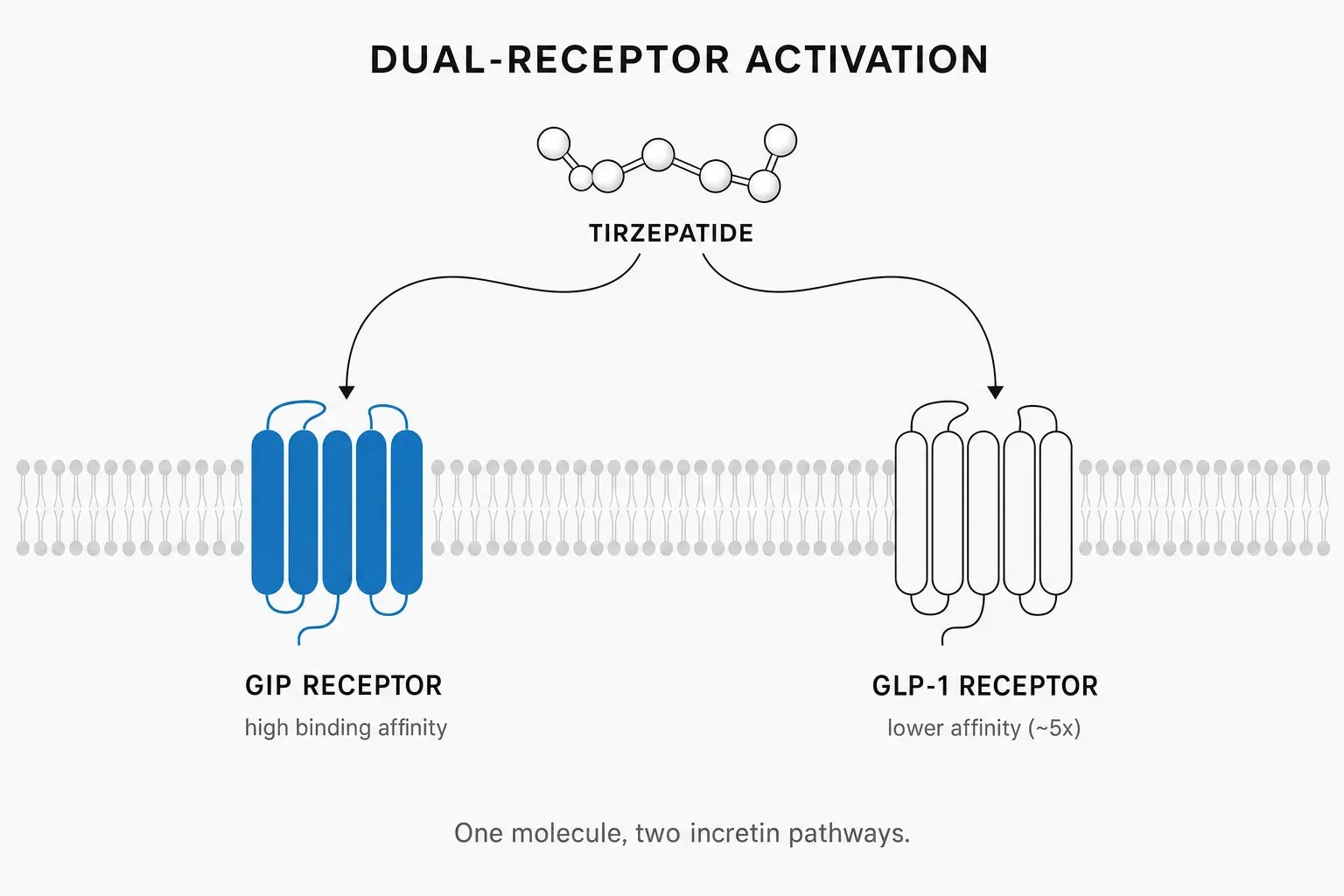
Tirzepatide was not designed to activate both receptors equally. It binds with high affinity to GIP receptors (comparable to endogenous GIP) but exhibits lower affinity for GLP-1 receptors (approximately 5-fold less than native GLP-1). This differential binding profile is intentional. Published research indicates this combination creates a synergistic effect, where the combined receptor activation produces distinct outcomes compared to single-receptor agonism.
- High binding affinity to GIP receptors (comparable to endogenous hormone)
- Lower binding affinity to GLP-1 receptors (~5× less than native GLP-1)
- Differential binding creates synergy between both pathways
- Combined receptor activation distinct from mono-agonism
- Novel tool for dual-receptor pharmacology research
- GLP-1: Incretin signaling and gastric motility modulation
- GIP: Insulin secretion pathway and lipid metabolism interaction
- Glucagon: Thermogenic and lipolytic pathway activation
- Triple activation creates documented synergistic effects
- Combined signaling distinct from single or dual-receptor activation

Research Applications
Areas of Scientific Investigation
Retatrutide has become a valuable tool for researchers exploring triple-receptor agonism and metabolic pathway interactions. Because it affects three signaling pathways simultaneously, it enables investigation of receptor cross-talk and synergistic mechanisms that were difficult to study with single or dual-target compounds. The scientific literature continues to expand with new findings.
- GLP-1, GIP, and Glucagon receptor binding kinetics
- Triple agonist mechanisms in cell-based assays
- Incretin and glucagon pathway signaling studies
- Hepatic receptor interaction and lipolytic pathway research
- Thermogenic biomarker correlation studies
- Comparative analysis of mono vs dual vs triple receptor activation
Understanding Tirzepatide: Mechanism of Action
Tirzepatide represents a novel approach in incretin-based research. Most peptides in this category target a single receptor — such as GLP-1 agonists like semaglutide. Tirzepatide is structurally distinct: it is the first compound designed to activate both GLP-1 and GIP receptors simultaneously. This dual-agonist mechanism is why researchers find it valuable for studying receptor cross-talk and metabolic pathway interactions.
The molecule demonstrates differential receptor affinity. It binds to GIP receptors with high affinity (comparable to endogenous GIP), while exhibiting approximately 5-fold lower affinity for GLP-1 receptors compared to native GLP-1. Published research indicates this "imbalanced" binding profile contributes to its unique pharmacological characteristics.
When both receptor pathways are engaged in this specific manner, studies have documented what researchers describe as a synergistic effect — where the combined receptor activation produces measurable outcomes distinct from single-receptor activation alone.
The compound demonstrates extended stability with a prolonged half-life, making it suitable for weekly intervals in research protocols. For scientists investigating incretin biology, receptor pharmacology, or dual-agonist mechanisms, tirzepatide offers a unique research tool for exploring how these interconnected signaling systems function.
| PRODUCTS |
 Tirzepatide – 30mg
|
|
|---|---|---|
| Company | Ziol Lab Peptides |
Typical Competitor |
| Price | $170.00 | $305.00 |
| 10 Vials | $980.00 | $1,765.00 |
| Purity | ≥99% | 96% |
| Quantity | 30mg | 30mg |
| Shipping | Free 2-Day Shipping | 3-10 Business Day |